Diagnostic Dashboard
Global Biases
Climate Variability (ERA5)
CMIP6
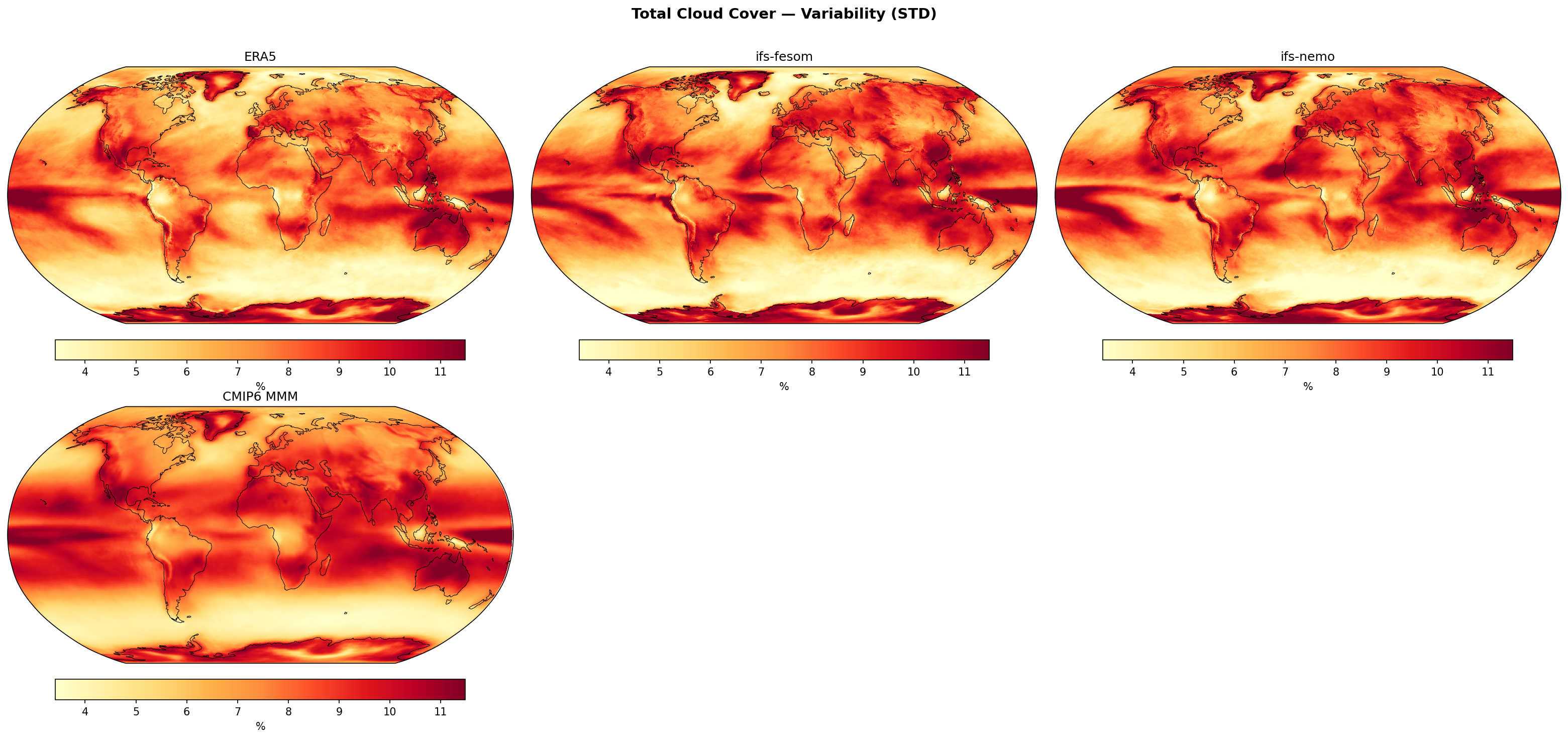
IFS-NEMO demonstrates the highest fidelity in reproducing global climate variability, whereas ICON exhibits a systematic bias characterized by excessive continental volatility and suppressed oceanic convective variance.
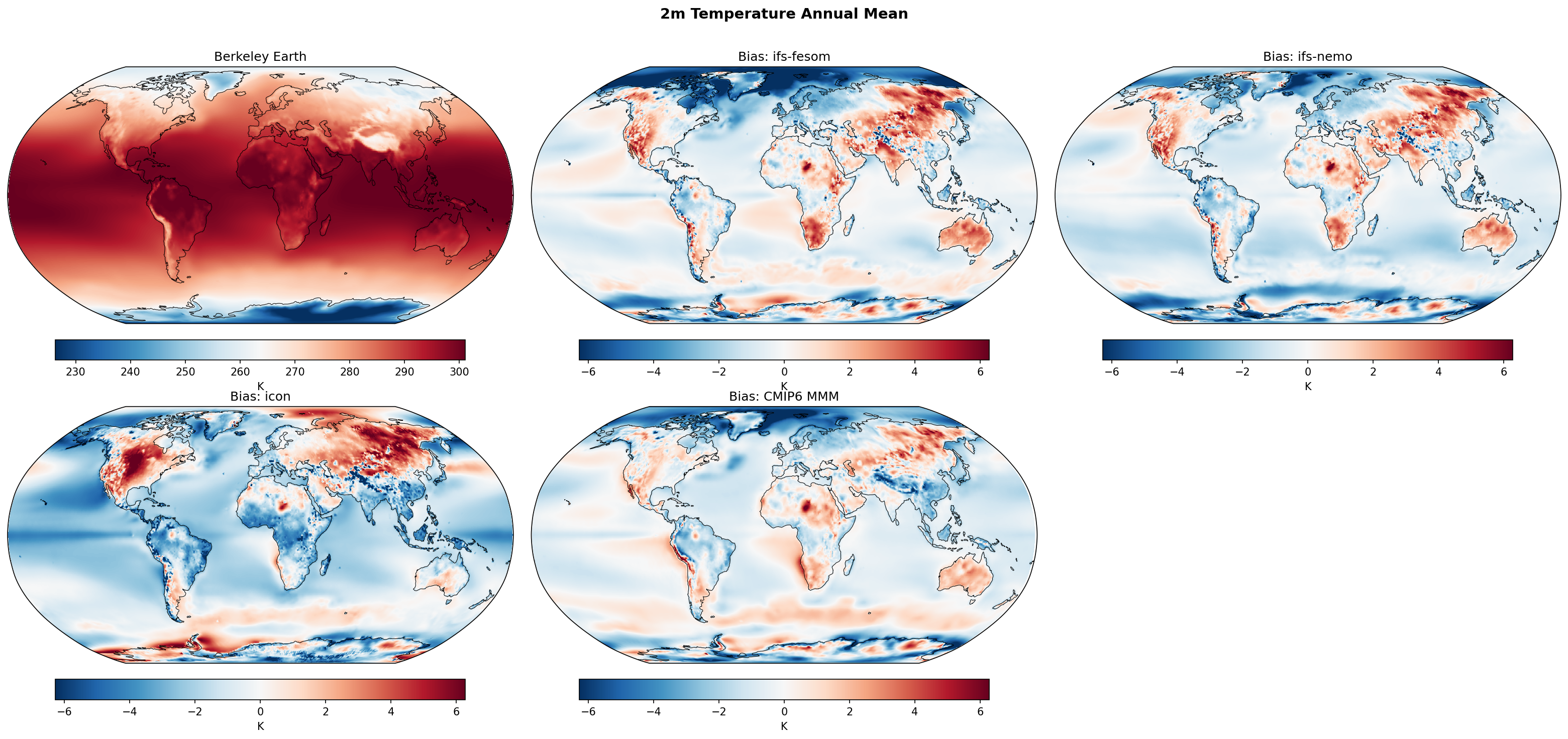
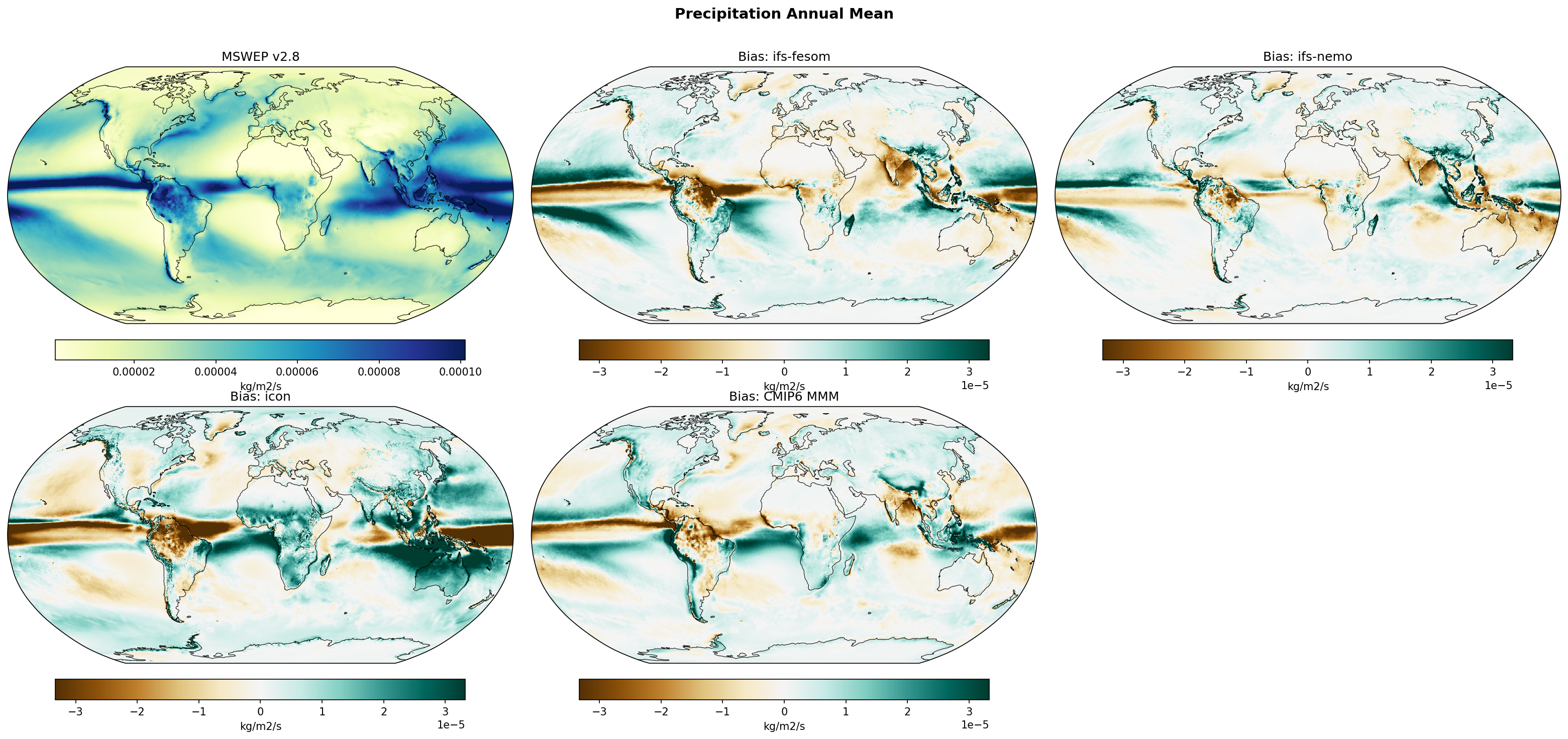
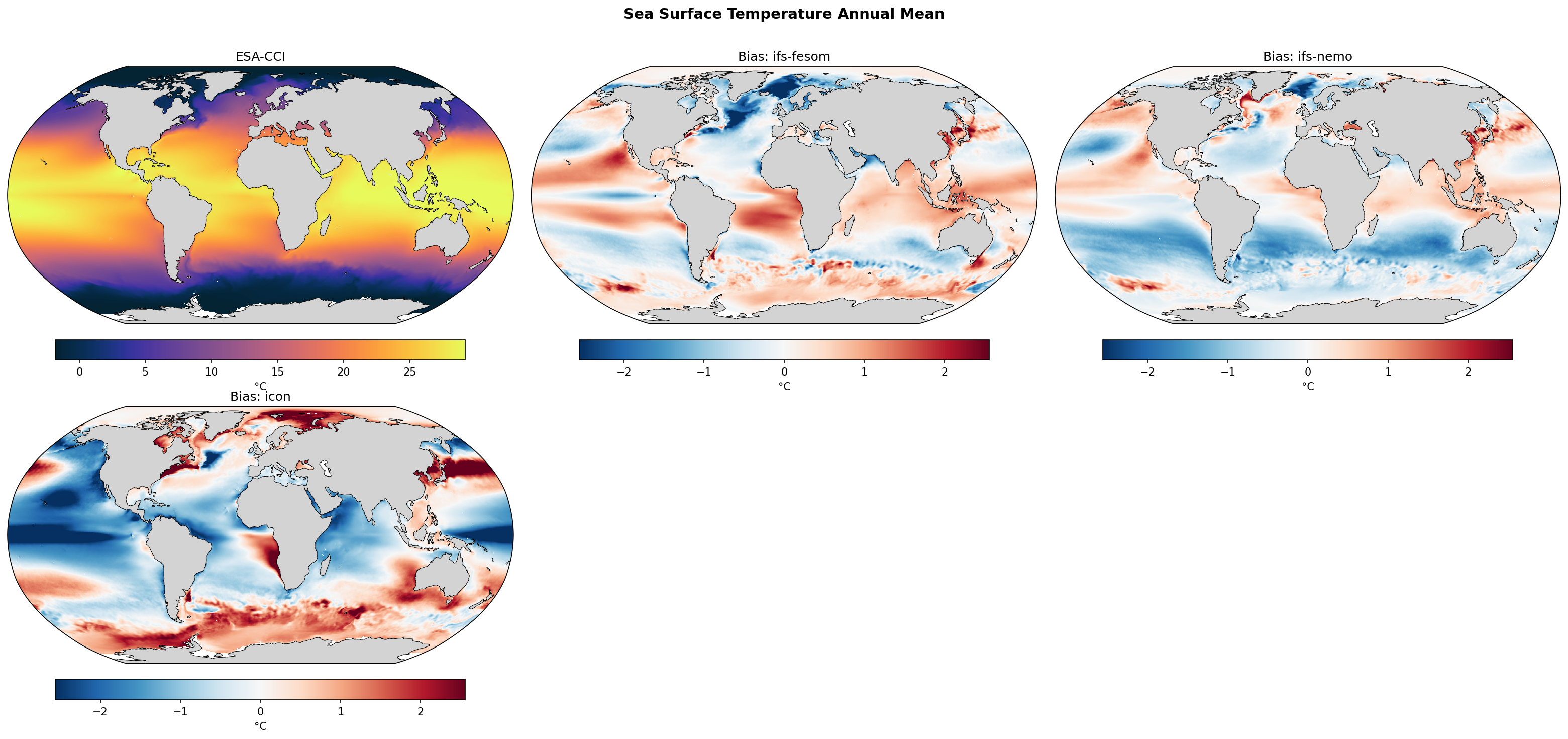
Global Climatology Biases
CMIP6
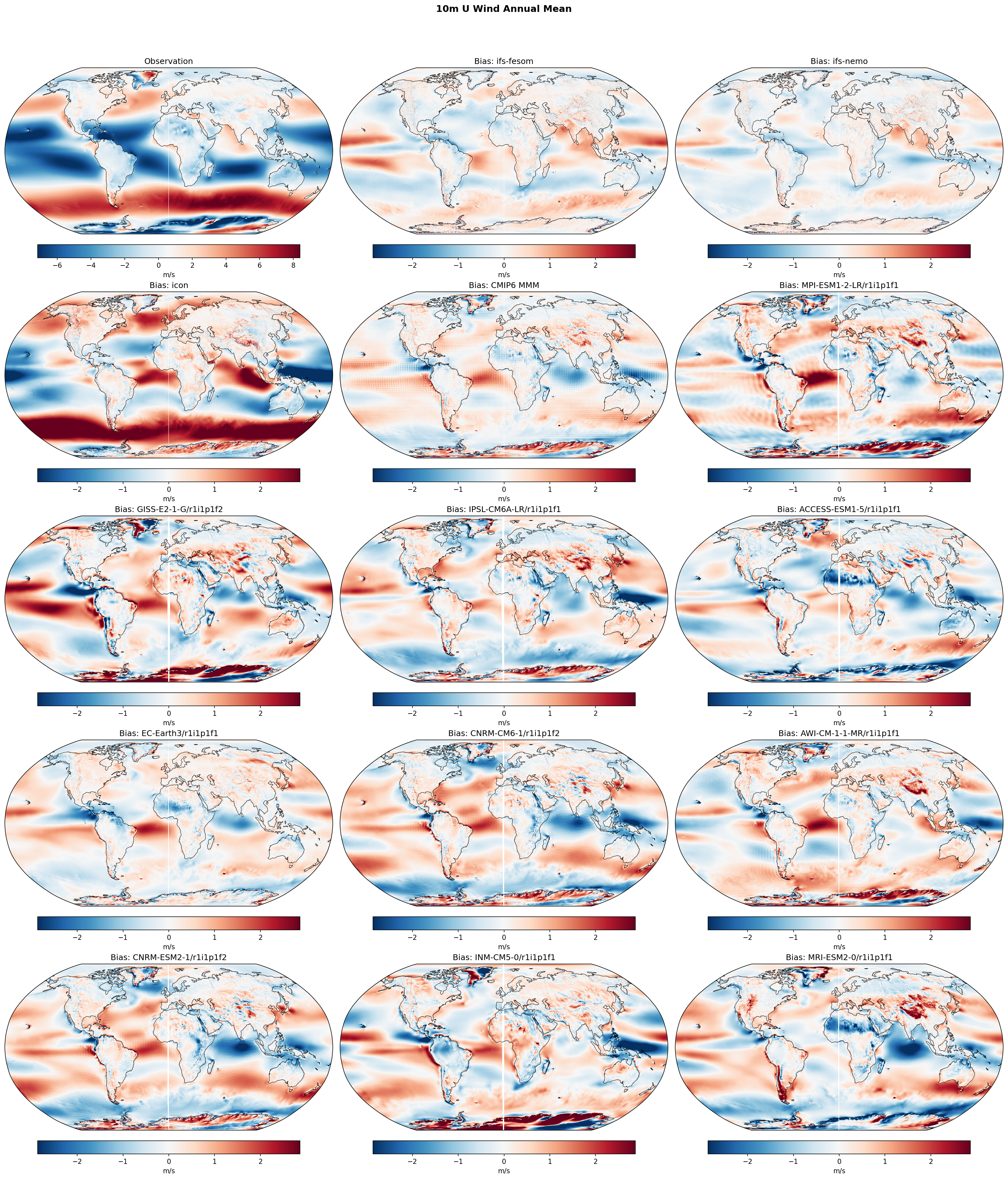
High-resolution IFS-coupled models demonstrate exceptional global fidelity and successfully resolve CMIP6-era topographic and coastal upwelling biases, whereas the ICON model is compromised by severe, systemic circulation and radiative errors, though all models persistently struggle with parameterized convection and marine stratocumulus clouds.
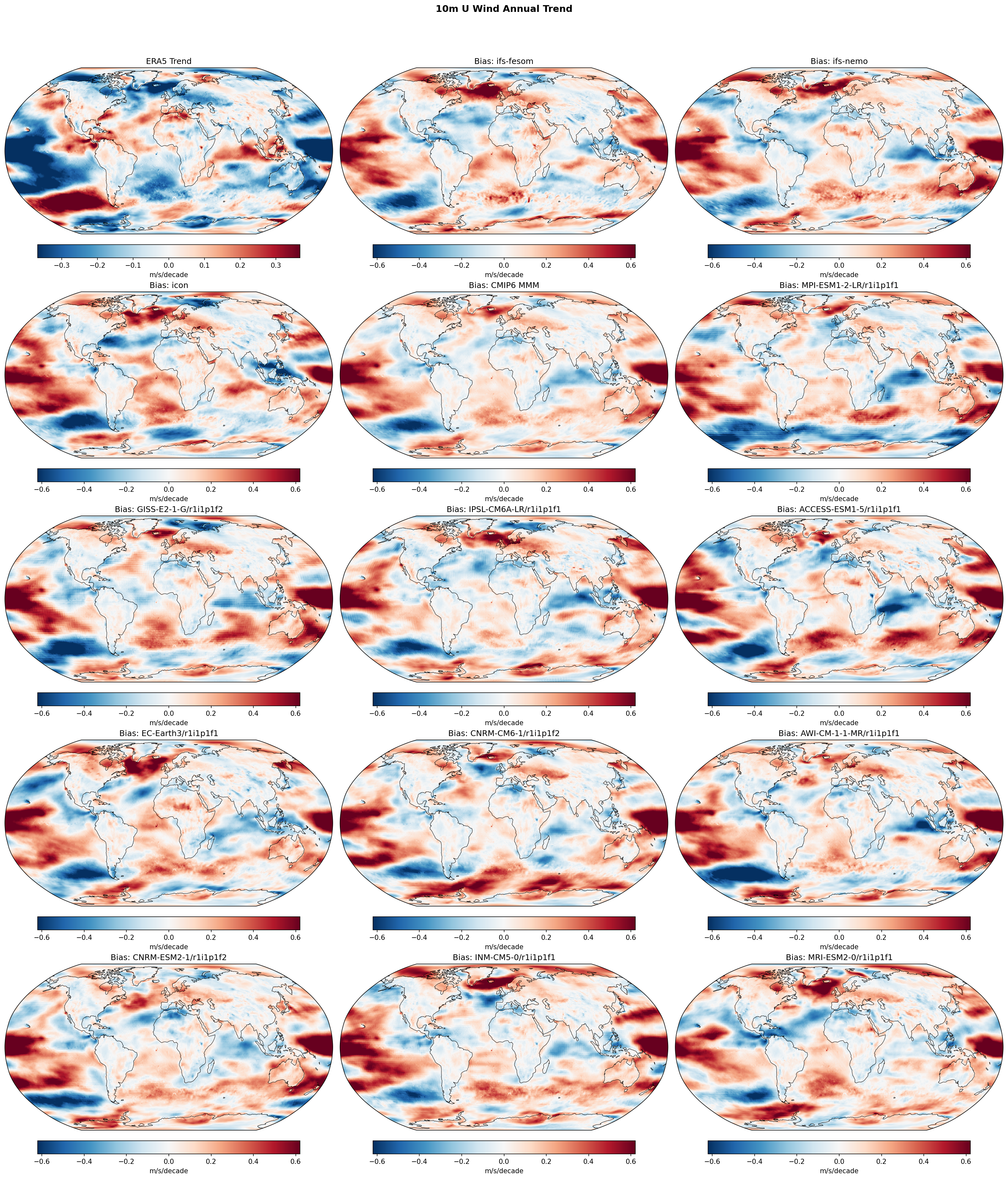
Global Linear Trends
CMIP6
High-resolution DestinE models fail to capture the observed 1990–2014 intensification of the Pacific Walker Circulation and underestimate Arctic amplification trends, confirming that resolution alone does not correct the phase mismatch of internal decadal variability inherent to free-running coupled simulations.
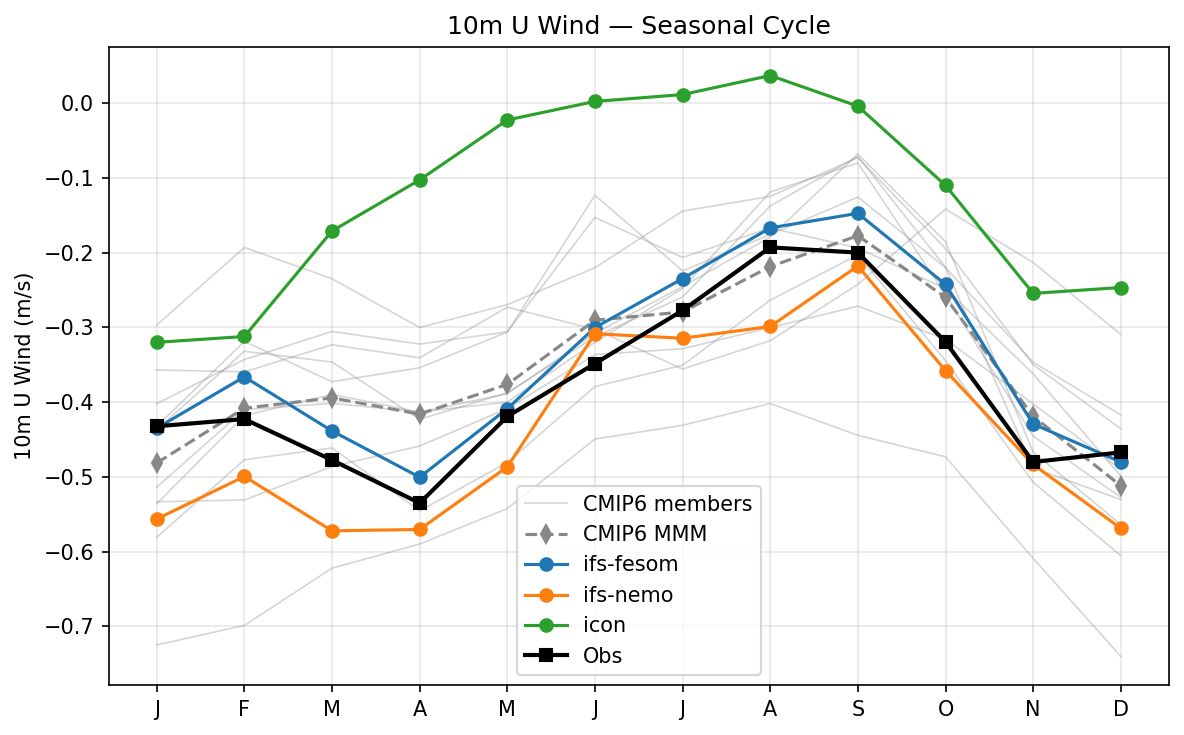
Seasonal Cycle
CMIP6
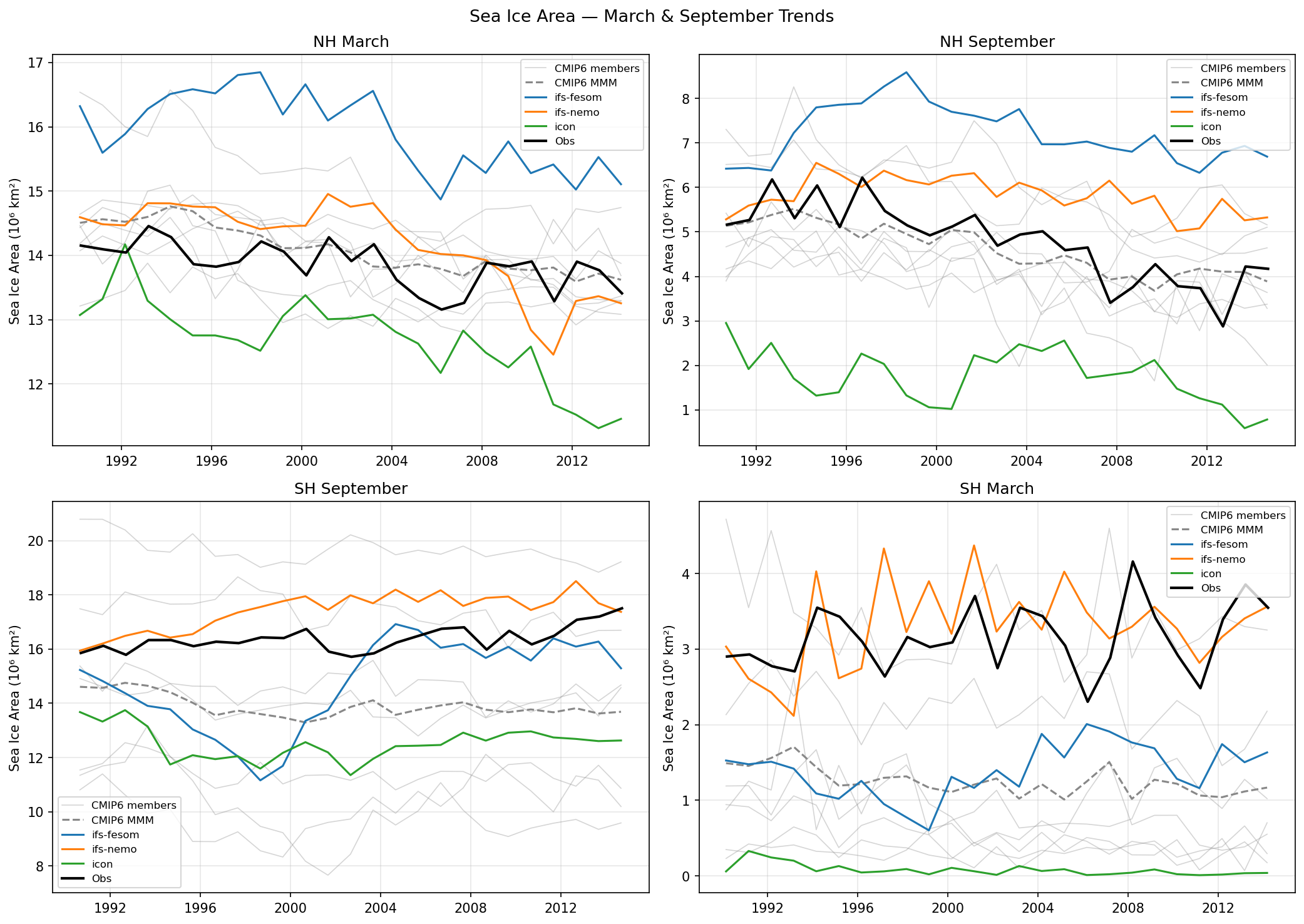
DestinE high-resolution models significantly narrow the inter-model spread of CMIP6 and reverse long-standing shortwave radiation biases, but they introduce an overly active hydrological cycle and systematic cold biases driven by an overly reflective planetary albedo.
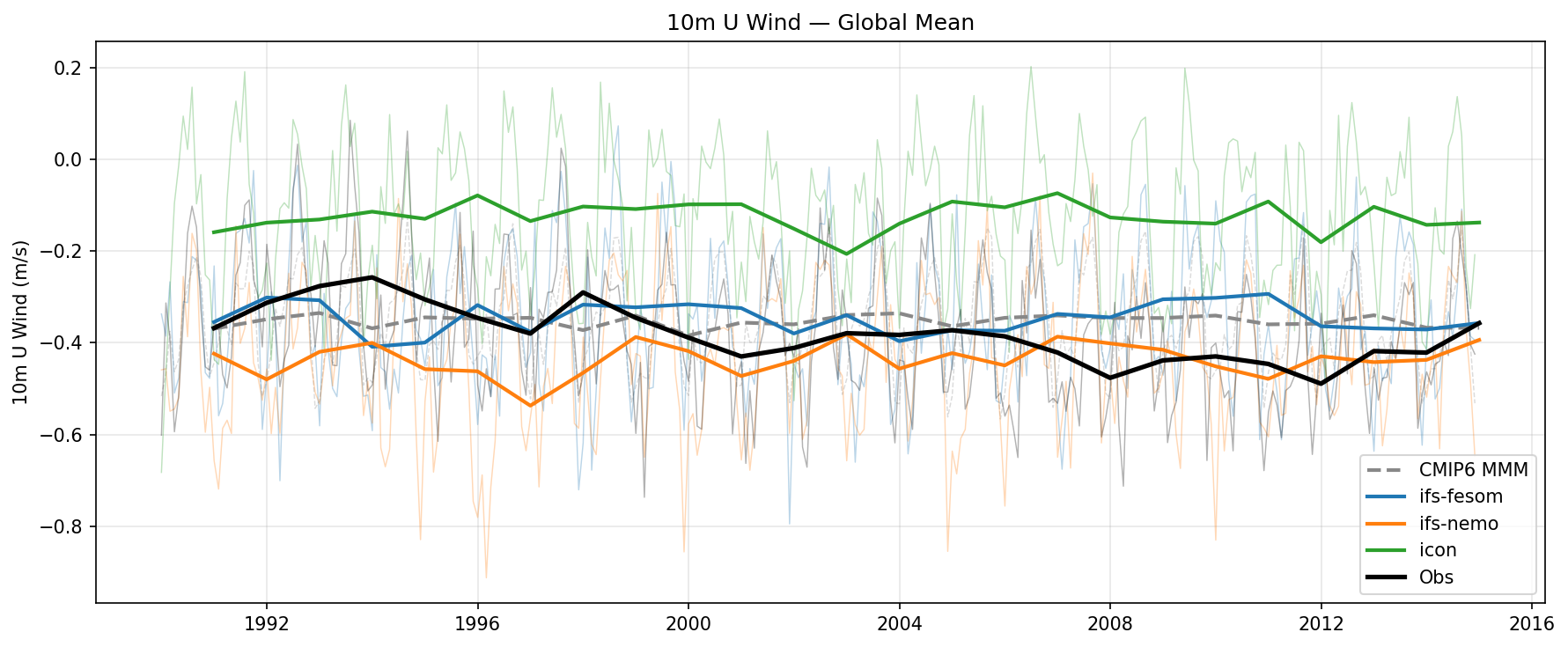
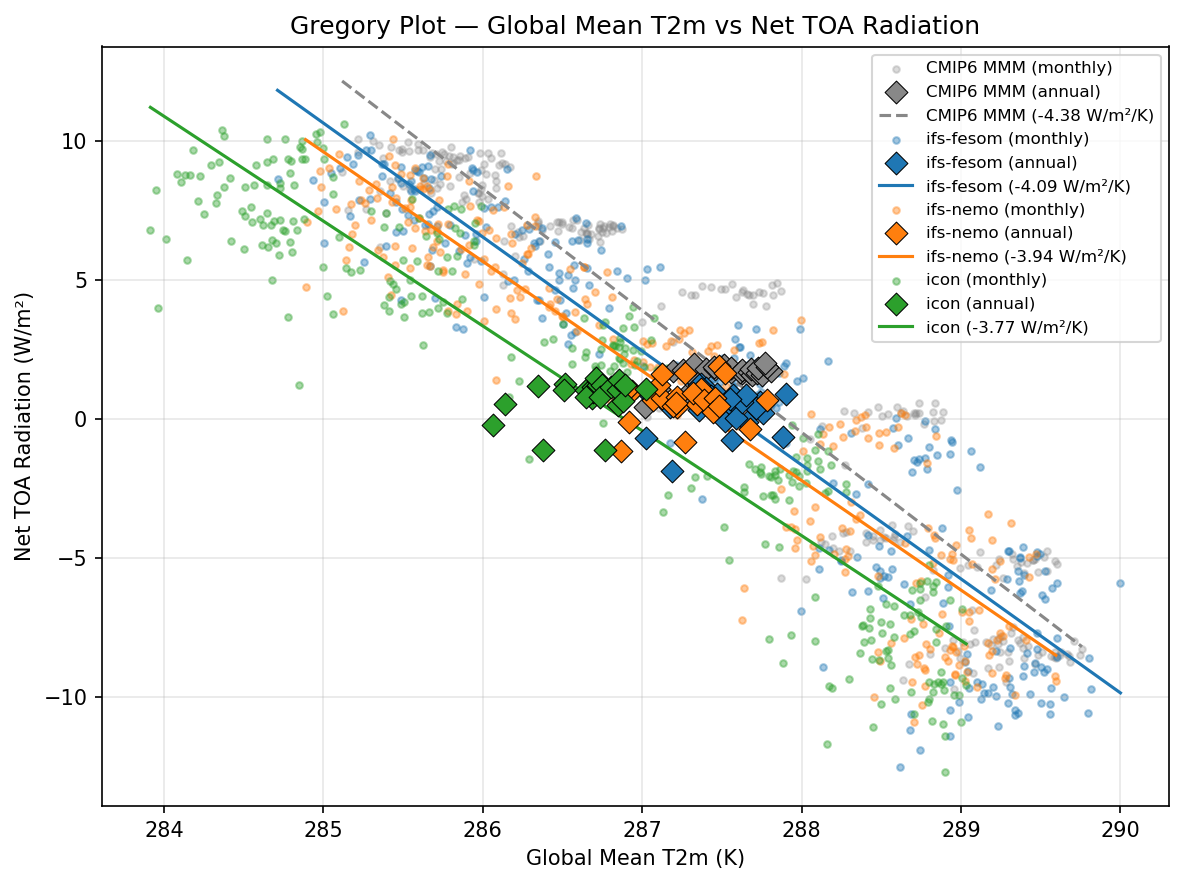
Global Mean Time Series
CMIP6
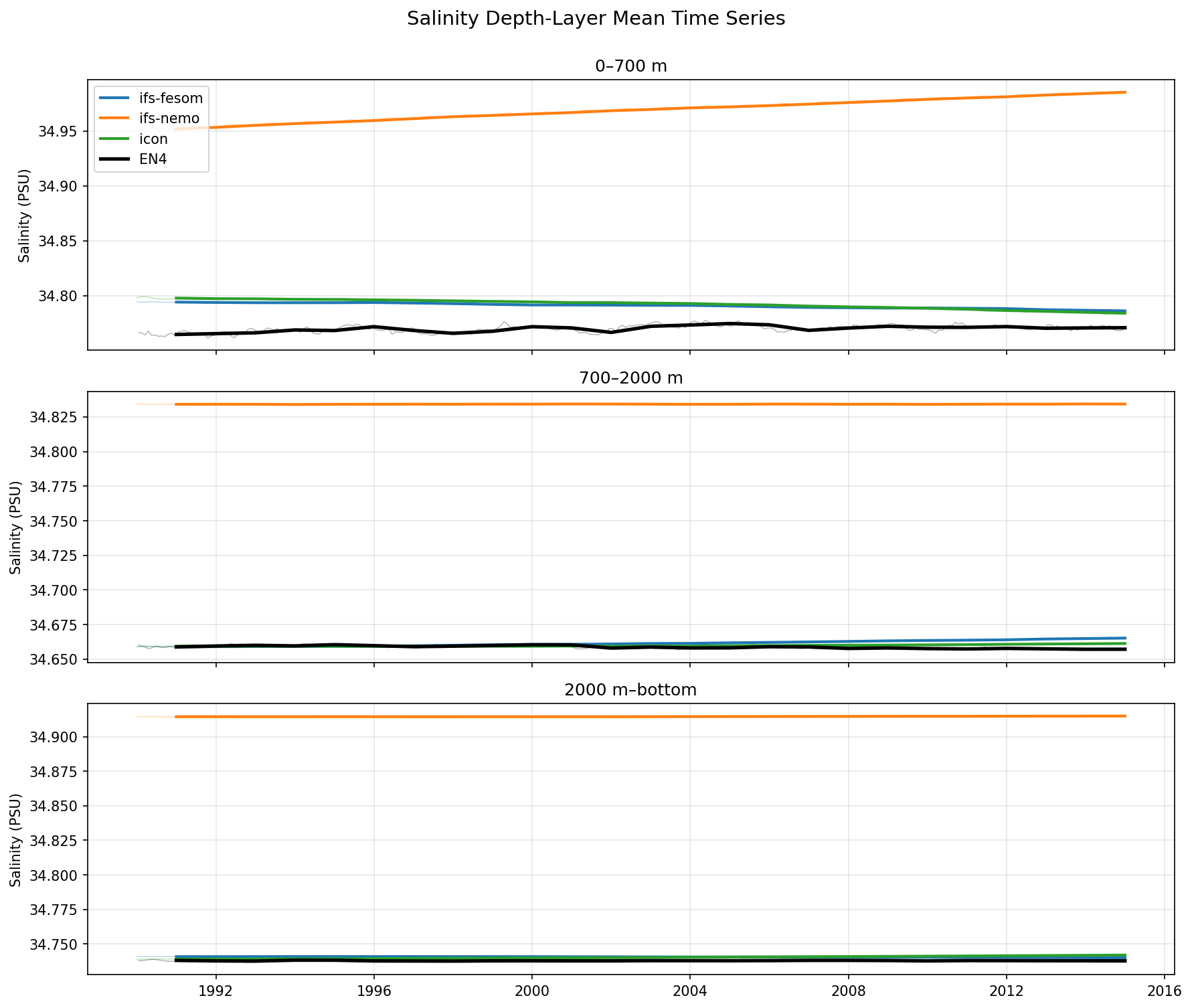
High-resolution (~5 km) DestinE models demonstrate marked improvements in downward surface shortwave radiation over the CMIP6 multi-model mean, though they continue to exhibit overly active hydrological cycles and distinct systemic biases, with IFS-FESOM outperforming ICON in representing the baseline climate state.